

Digital transformation is no longer a boardroom buzzword. It is a strategic necessity that defines how organizations compete, scale, and survive. From my perspective as a CEO, the conversation around transformation has shifted dramatically over the past decade. It is no longer about adopting technology for efficiency alone. It is about building resilience, enabling innovation, and ensuring sustainable growth.
At the center of this transformation lies one critical foundation: Cloud security. Without it, even the most ambitious digital initiatives can quickly become liabilities rather than assets.
Beyond Technology: A Strategic Shift
Digital transformation is not simply about migrating systems to the cloud or automating workflows. It represents a fundamental change in how businesses operate, deliver value, and engage with customers. Cloud platforms enable scalability, flexibility, and global reach. However, moving to a secure cloud environment requires more than technical implementation. It requires leadership commitment and a culture that prioritizes security alongside innovation.
From a CEO’s viewpoint, digital transformation must align with long-term business goals. Every technology decision should answer three questions:
- Does it enhance operational efficiency
- Does it improve customer experience?
- Does it strengthen risk management and Cloud security?
When these three pillars are balanced, transformation becomes a competitive advantage rather than a risk exposure.
Why Cloud Security Is a Business Imperative
The shift to cloud-based systems has unlocked enormous potential for organizations of all sizes. Startups can scale faster. Enterprises can modernize legacy systems. Teams can collaborate globally. But with opportunity comes responsibility.
Data breaches, compliance violations, and cyber threats are not just IT concerns. They are business risks that directly impact revenue, reputation, and stakeholder trust. This is why Cloud security must be embedded at every stage of digital transformation.
For startups in particular, cloud security for startups is often overlooked in the race to launch and scale. Yet early-stage companies are frequent targets for cyberattacks due to perceived vulnerabilities. Building a secure cloud infrastructure from the outset prevents costly remediation later and builds investor confidence.
Leadership in the Age of Transformation
Digital transformation requires executive ownership. It cannot be delegated entirely to IT departments. As a CEO, the responsibility is to champion a vision where innovation and security move together.
This means investing in:
- Modern cloud architectures built on secure cloud principles
- Skilled cybersecurity talent and continuous training
- Strategic partnerships with technology experts
- Ongoing risk assessments and compliance frameworks
Transformation is not a one-time initiative. It is an ongoing evolution. Organizations that treat security as an afterthought often struggle with reactive crisis management. Those that integrate Cloud security into their strategic roadmap operate with confidence and agility.
The Competitive Advantage of Getting It Right
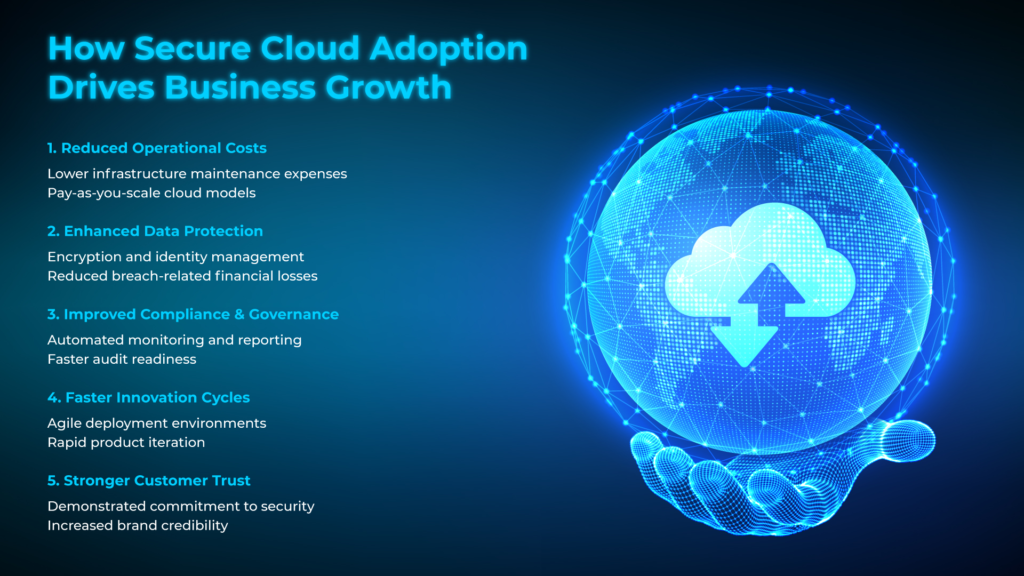
In today’s market, trust is currency. Customers expect their data to be protected. Investors expect risk mitigation. Regulators demand compliance. Businesses that proactively invest in cloud security for startups and enterprises alike position themselves ahead of competitors who treat security as optional.
Digital transformation delivers measurable returns when built on a secure cloud foundation. It drives efficiency, fuels innovation, and protects long-term value. From a CEO’s perspective, the real impact of transformation is not just technological progress. It is strategic resilience.
The organizations that thrive in the digital era are those that understand a simple truth: growth and security are not opposing forces. They are interconnected drivers of success.
Secure your cloud today. Let’s collaborate to ensure your systems are safe.