
Personalization has moved from a “nice-to-have” feature to a core expectation in modern software. Today’s users want products that understand their needs, adapt to their behavior, and deliver relevant experiences from day one. For startups building SaaS products, meeting these expectations at scale used to be complex and resource-intensive. That is where AI in SaaS is changing the game.
By embedding intelligence directly into software platforms, startups can now deliver deeply customized experiences without massive teams or bloated infrastructure. From smarter onboarding to real-time feature recommendations, AI-powered personalization is helping SaaS startups compete with far larger players.
Why Personalization Matters More Than Ever in SaaS?
SaaS users interact with products differently depending on their goals, roles, and technical expertise. A first-time user exploring basic functionality has very different needs from a power user managing complex workflows. When everyone sees the same interface, same nudges, and same content, engagement drops fast.
Personalization improves activation rates, reduces churn, and increases lifetime value. More importantly, it helps startups build products that feel intuitive rather than overwhelming. With AI-driven SaaS, personalization no longer relies on static rules or manual segmentation. It evolves continuously as user behavior changes.
How AI Enables Smarter SaaS Personalization?
AI introduces a level of adaptability that traditional logic-based systems simply cannot match. Instead of relying on predefined user paths, machine learning models analyze patterns across usage data, interactions, and outcomes.
Personalized AI can tailor onboarding flows based on how users move through the product, recommend features that align with individual usage patterns, and even adjust UI elements dynamically. For example, if a user consistently skips advanced settings, the platform can simplify their dashboard automatically. If another user frequently explores analytics tools, the system can surface deeper insights proactively.
This level of responsiveness makes the product feel more human, even as the user base grows.
Key Areas Where AI Is Transforming SaaS Experiences
AI-driven personalization shows up across the entire SaaS lifecycle. During onboarding, AI can predict where users are likely to drop off and adjust guidance accordingly. In day-to-day usage, it can prioritize features, content, or workflows that are most relevant to each user.
Customer support is another major area of impact. AI-powered chatbots and recommendation engines can offer contextual help based on user history, reducing response times while improving resolution quality. Over time, AI in SaaS also helps founders understand which features actually drive value, enabling smarter product decisions.
How AI Personalization Works in SaaS?
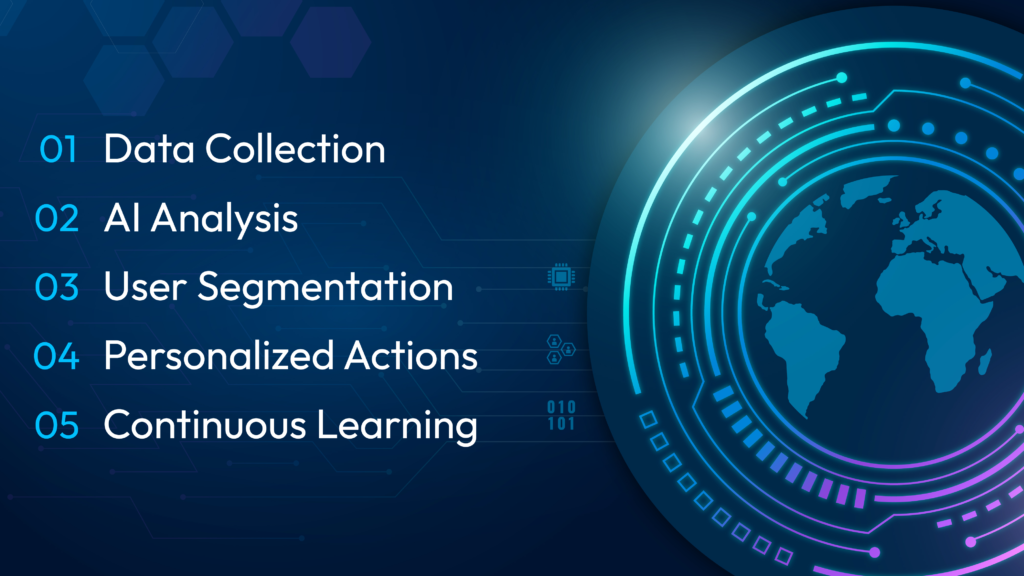
A seamless feedback loop where user data is analyzed in real time to deliver smarter, more relevant product experiences at every touchpoint.
Data Collection – User behavior, feature usage, session duration, and interactions
AI Analysis – Machine learning models identify patterns and preferences
User Segmentation – Dynamic grouping based on real-time behavior, not static rules
Personalized Actions – Tailored onboarding, feature recommendations, UI adjustments
Continuous Learning – AI refines personalization as user behavior evolves
Why Startups Benefit the Most from AI-Driven SaaS?
Startups operate under tight constraints, but they also have an advantage: flexibility. Implementing personalized AI early allows startups to build scalable experiences without rebuilding later. Instead of hardcoding assumptions, AI-driven SaaS platforms learn directly from users, reducing guesswork.
This approach also shortens feedback loops. Founders can identify friction points faster, test changes intelligently, and iterate with confidence. As a result, personalization becomes a growth engine rather than a maintenance burden.
Looking Ahead
As AI models become more accessible and sophisticated, personalization will become a baseline expectation rather than a differentiator. Startups that embrace AI in SaaS today are positioning themselves to deliver smarter, more engaging products tomorrow.
Ready to leverage AI for your SaaS growth? Let’s chat!