
Cloud security has evolved from a technical safeguard into a business-critical discipline. In 2026, organizations are no longer asking whether the cloud is secure, but how to maintain a secure cloud environment while scaling fast, integrating new tools, and supporting distributed teams. The answer lies in collaboration, visibility, and continuous improvement.
The Changing Landscape of Cloud Security in 2026
Cloud adoption continues to accelerate across industries, bringing greater agility and innovation. At the same time, it has expanded the attack surface. Multi-cloud deployments, API-driven integrations, and remote access models require organizations to rethink how cloud security is managed.
Why Shared Responsibility Matters More Than Ever?
Cloud service providers secure the underlying infrastructure, but organizations are responsible for how workloads, access, and data are configured. When security ownership is fragmented, gaps emerge. A shared responsibility model ensures that developers, operations teams, and leadership work together to protect cloud environments.
Building a Secure Cloud Through Collaboration
A secure cloud is not achieved through isolated controls or one-time audits. It is built through ongoing collaboration across teams and systems.
Embedding Security Across Teams
Security must be integrated into everyday workflows. Developers need secure coding standards, DevOps teams must include automated checks in CI/CD pipelines, and leadership should align security goals with business priorities. This approach reduces vulnerabilities early and minimizes costly rework.
Identity, Access, and Configuration Management
Strong access controls and accurate configurations form the backbone of effective cloud security. Without visibility into who has access and how systems are set up, even the most advanced tools fall short.
Strengthening Access Controls for Modern Teams
Role-based access, least-privilege permissions, and strong authentication mechanisms help prevent unauthorized access. For cloud security for startups, where roles change quickly and teams scale rapidly, regular access reviews are essential to avoid unnecessary exposure.
Automation, Monitoring, and Cloud Resilience
As cloud environments grow more complex, manual oversight becomes unsustainable. Automation plays a critical role in maintaining a secure cloud at scale.
Using Automation to Stay Ahead of Threats
Cloud security posture management tools continuously monitor environments for misconfigurations, policy violations, and unusual behavior. Automated alerts and remediation help teams respond faster and reduce risk before issues escalate.
The Collaborative Cloud Security Model for 2026
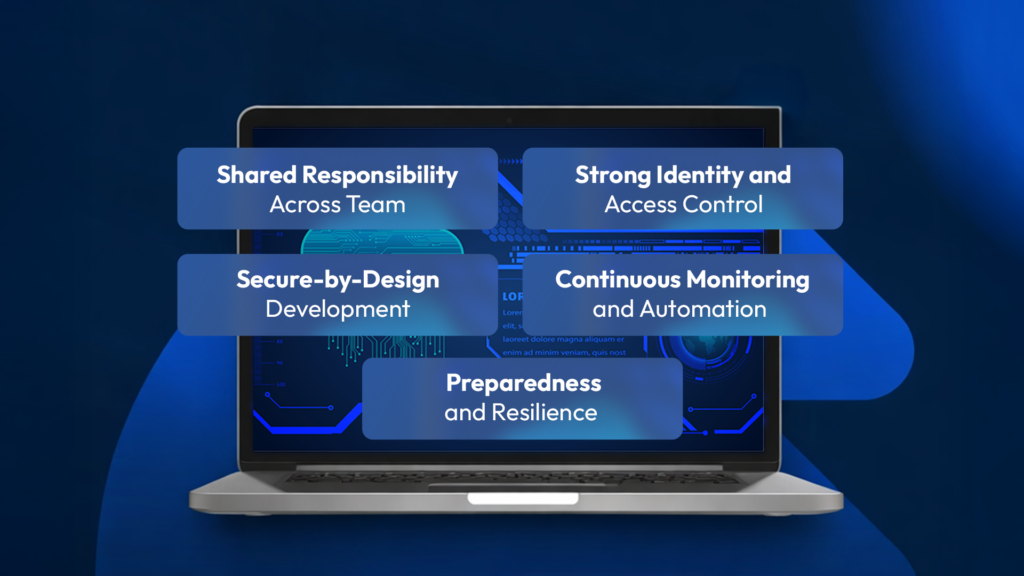
A simple framework that shows how people, processes, and technology work together to strengthen cloud security.
- Shared Responsibility Across Teams: Security is owned collectively by development, operations, security, and leadership teams.
- Strong Identity and Access Controls: Enforce least-privilege access, multi-factor authentication, and regular permission reviews.
- Secure-by-Design Development: Integrate security checks early in the development and deployment lifecycle.
- Continuous Monitoring and Automation: Use automated tools to detect risks and respond in real time.
- Preparedness and Resilience: Incident response planning and backups ensure continuity during disruptions.
Preparing for the Future of Cloud Security
Encryption, secure key management, and data classification remain essential as regulatory requirements evolve. Organizations must also maintain transparency into where data resides and how it is accessed to sustain trust.
At Invisia Software, cloud security is approached as a long-term collaboration rather than a one-time initiative. By aligning people, processes, and technology, organizations can build secure cloud environments that support growth without compromising reliability. In 2026 and beyond, collaboration will remain the foundation of effective cloud security.